




Mamma
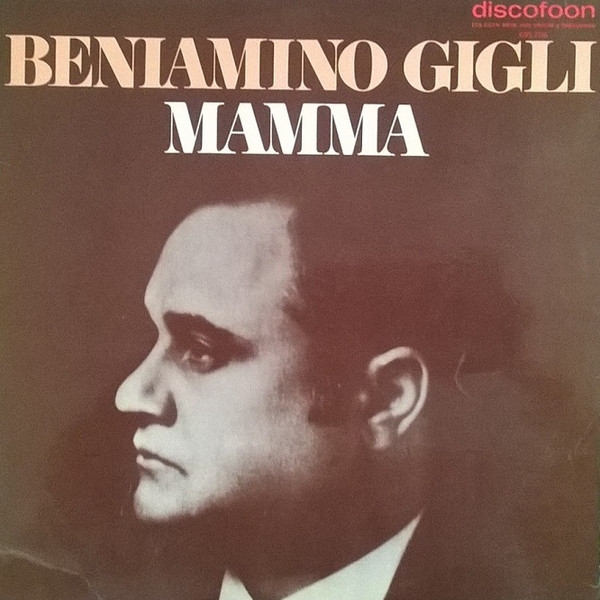
Mamma was also composed for a movie. Despite the previous professional relationships with Gigli, before resorting to Bixio, the Itala Film production company had commissioned Pietro Mascagni to write the music. He wrote a complex symphony, but the producers were not convinced, and so they began to think of a song. With the words of Cherubini, Bixio quickly composed Mamma. Only a few days after being called in, he went to the Itala Film studio to have them hear the song on the piano, marking it with his voice. There was a lot of hesitation. Those present tried to work out how they could present a piece like that to the tenor: Gigli had approved the film’s subject, but reserved the right to accept the part, on the condition the music was composed first. Bixio suggested he go in person to see the opera singer, who at the time was busy at La Scala. The audition took place at the hotel. The tenor welcomed him with an expression of uncertainty on his face, but at the end of the performance, he was enthusiastic. From then on, he performed Mamma thousands of times. It was Gigli himself who carefully explained to Mascagni that he preferred Mamma, and fortunately, the maestro didn’t take it too badly (…). They were seeking a song with all the requisites for variety and review: short, highly memorable, and above all, singable, so that the spectator, once having left the cinema, would remember it. Therefore, a song ready to be recorded on disc, broadcast on the radio, danced in the ballrooms, and then sold again in the form of scores and lyrics. If the song was performed by a successful singer-actor, the film, on the one hand, was guaranteed excellent chances of having an audience (because this was the same audience that went to the opera and loved tenors), and the production house, if it kept the rights to the music edition, recovered its capital with the song’s new release on the market
Excerpt from: Mamma. Alle origini di uno stereotipo italiano – by Carlo and Franco Bixio, with Sabina Ambrogi, Donzelli, Rome 2007, pp. 86-87.